Q2 26 Tech Earnings Preview: AI Stocks Need to Prove They Aren’t Selling Vaporware
As Q2 2026 technology earnings begin, The Coastal Journal is returning to the question this earning season Wall Street would rather postpone: Can Big


As Q2 2026 technology earnings begin, The Coastal Journal is returning to the question this earning season Wall Street would rather postpone:
- Can Big Tech’s historic capital-spending boom produce enough free cash flow, return on invested capital, and durable earnings growth to justify today’s valuations?
Last year, we were ahead of the curve in identifying that the initial phase of the AI buildout would lead to declining free cash flow, increasing depreciation, higher capital commitments, and greater reliance on debt, leases, and operating leverage.
The next phase has arrived. The burden of proof is now shifting from promises about future returns to measurable financial returns.
Nobody Understands It, but Everybody Wants In
In HBO’s hit comedy Silicon Valley, Erlich Bachman hears a futuristic virtual-reality pitch and immediately recognizes the trade:
“Oh my God, it’s a VR play. That’s the frothiest space in the valley right now. Nobody understands it, but everybody wants in. Any idiot can walk into a f**king room, utter the letters V & R, and VCs will hurl bricks of cash at them. By the time they find out that it’s vaporware, it’s too late. I have got to get in on this.”
His scheme revolves around exploiting people’s excitement in the moment. He sells them a shiny, brand-new “thing” that guarantees him immediate cash. However, the unwitting buyers are unable to audit it at the moment and are unaware of whether it will ever recoup the original investment. Moreover, he doesn’t care cause he wants to make the money today.
The oldest trick in markets is selling investors a future that cannot yet be audited.
A shiny new technology appears, the total addressable market becomes infinite, and investors are told that the company spending the most money today will own the world tomorrow. Revenue, margins, free cash flow, and return on invested capital become inconveniences—details to be figured out later.
Wall Street loves the distant future because the distant future has no quarterly filing.
That is why promotional narratives work so well. The seller receives cash today. Executives exercise options today. Early shareholders sell today. Meanwhile, the investor buying at the highest price is left underwriting a future product, customer, margin, and return on capital that may not arrive on the schedule implied by the valuation.
We saw this movie in 2000. We saw it again recently in 2021, when investors were told that every vehicle would become an EV, crypto would replace the dollar, and millions of people would trade the physical world for a permanent VR metaverse world.

Total addressable markets became substitutes for free cash flow, and rising stock prices became “proof” that the narratives were correct.
Then the Federal Reserve raised rates in 2022, liquidity tightened, and the market asked the question it should have asked from the beginning: where is the cold hard cash?
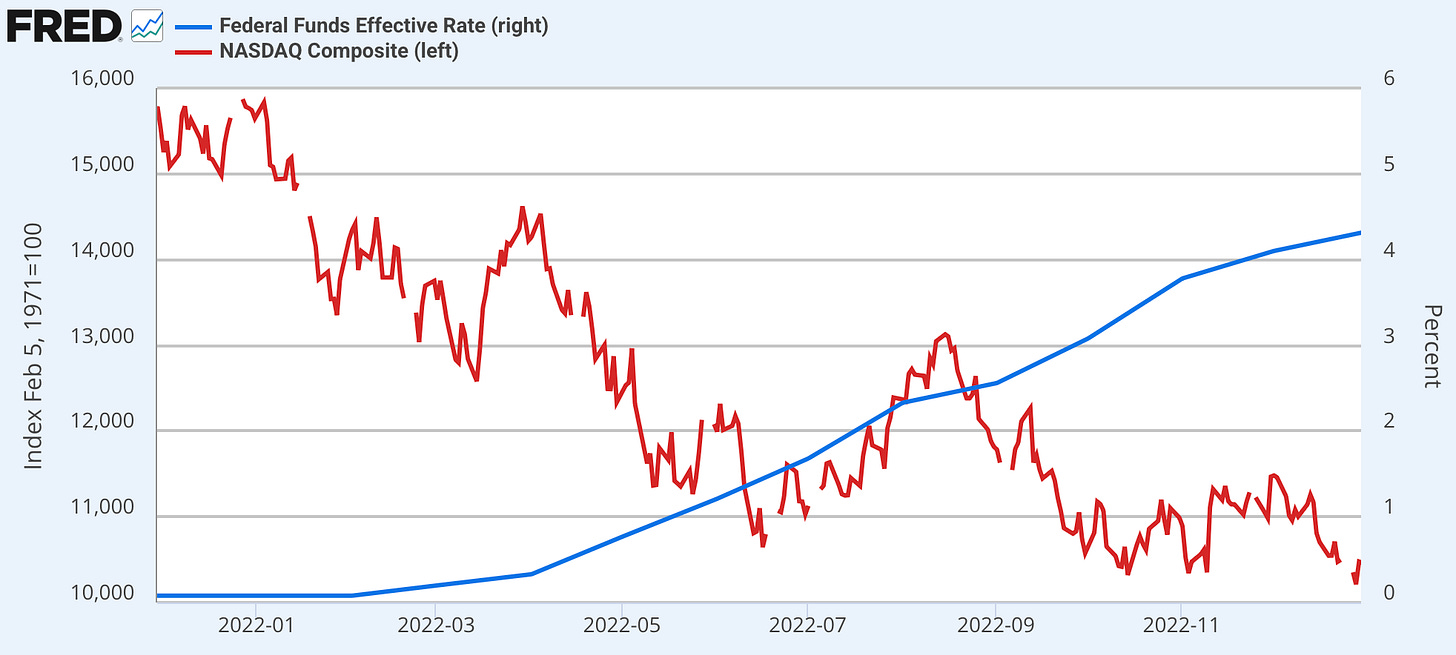
That is the issue entering Q2 2026 technology earnings. A rising stock price is only a price someone paid. It is not proof that the underlying business improved its cash flows, or that the infrastructure will earn its cost of capital, or that the investor buying today will earn an acceptable long-term return.
IBM Just Supplied the Real-World Example of Selling Vaporware
IBM delivered the first warning shot of this earnings season.
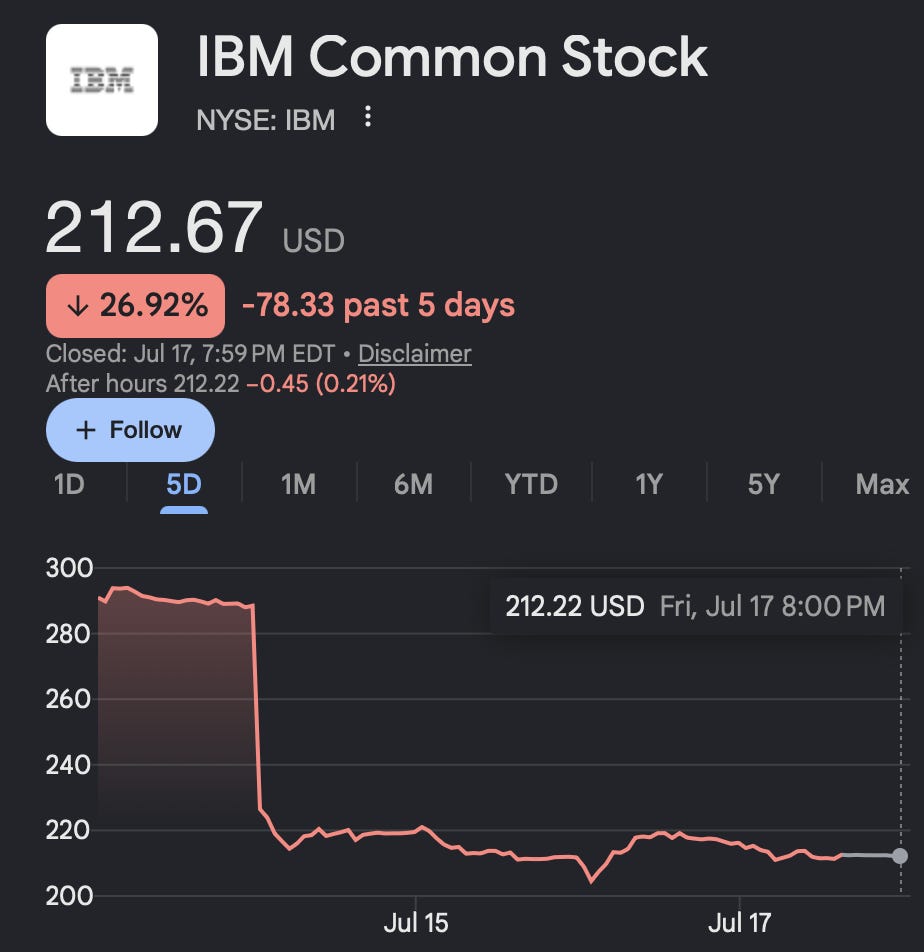
Its shares traded near $214 in mid-May before reaching an all-time closing high of $329.23 on June 2—a roughly 54% move in about a month. The market had begun assigning a substantial technology premium to a company associated with quantum computing, and the next generation of enterprise AI.
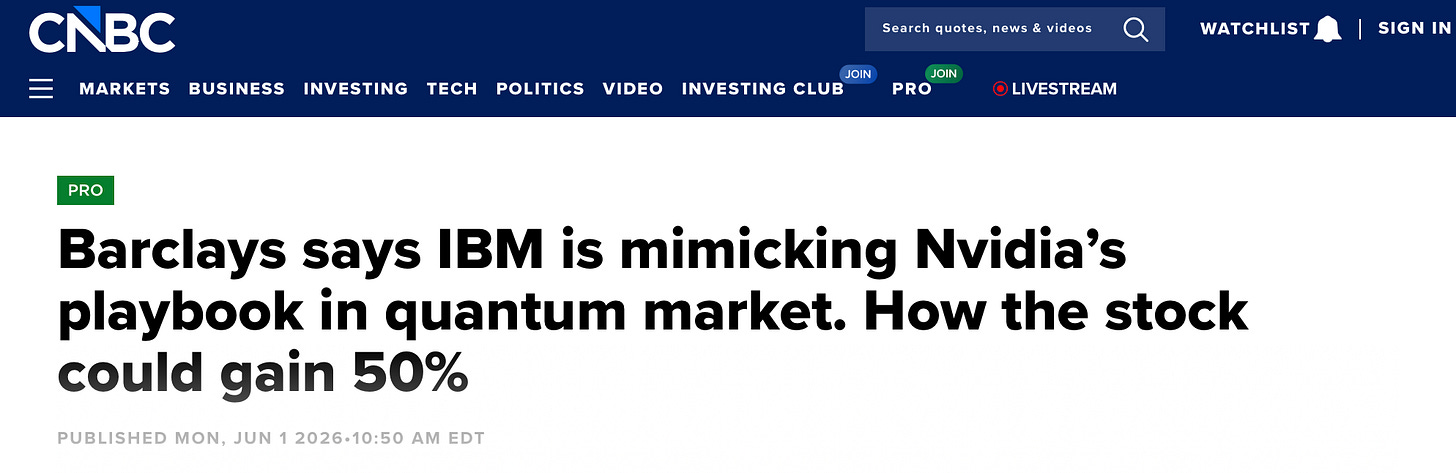
Then the existing business reminded investors that possibility is not the same thing as cash flow. IBM’s preliminary second-quarter revenue was $17.2 billion, up just 1% year over year and below the roughly $17.86 billion Wall Street expected. Adjusted earnings of $2.93 per share also missed consensus expectations. Management said clients shifted spending priorities faster than the company anticipated, leaving large deals unable to close on the expected timetable. IBM’s preliminary Q2 results
The stock fell roughly -25% on July 14, its worst one-day drop in decades, and by the following day it had returned close to where the rally began. The business had not become 54% more profitable during the stock pump by CNBC. It had simply become 54% more expensive as investors raced to capitalize future possibilities before the operating numbers existed to support them.
That is how narrative premiums work. They arrive quickly, feed on momentum,
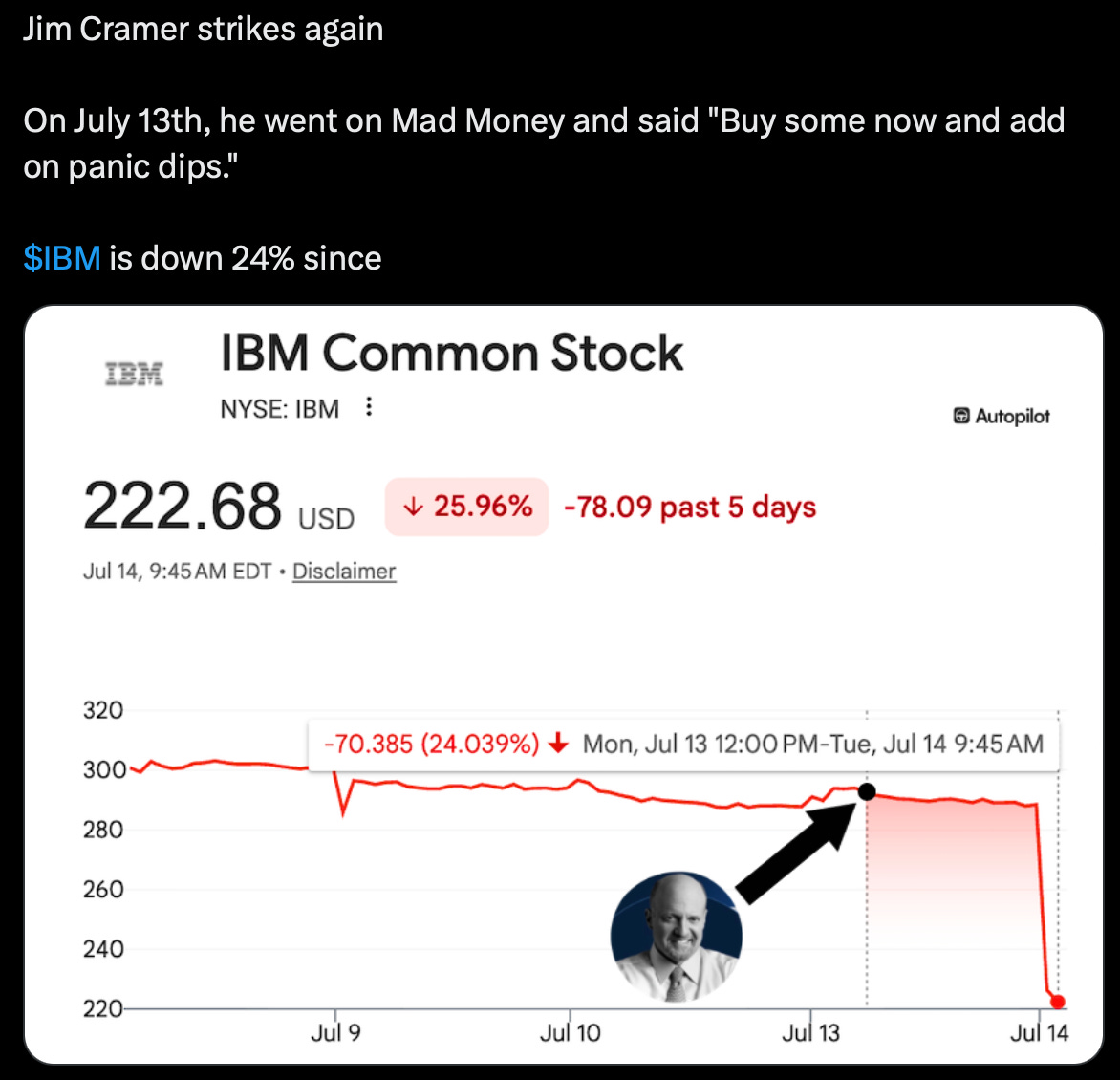
and disappear without asking permission when earnings fail to validate the story. IBM is proof that a company can be attached to an exciting future technology, have a real business, and still become a dangerous investment when the market gets too far ahead of the financial statements.
The AI Data-Center Dilemma
The central question behind the AI infrastructure boom is brutally simple: who ultimately captures the cold, hard cash?
Investors cannot answer that cleanly because the companies spending the most do not separately disclose the economics of the AI products they are selling. Google does not break out Gemini revenue, margins, or free cash flow. Amazon does not isolate AWS revenue generated specifically by large-language-model compute. Microsoft discusses Copilot adoption and Azure AI demand, but shareholders still cannot see a clean return on each additional dollar of AI infrastructure.
The spending is visible. It sits in CapEx guidance, property-and-equipment purchases, depreciation, finance leases, and shrinking free-cash-flow conversion. The payback is buried inside broad cloud, advertising, productivity-software, and subscription categories.
Investors can see the bill. They cannot yet see the paycheck.
If Gemini generated $10 billion of annual revenue, shareholders should be able to track whether that became $12 billion, $15 billion, or $20 billion. They should be able to compare the growth with gross margin, depreciation, operating income, free cash flow, and return on invested capital. Instead, investors are being asked to accept that AI is helping the broader platform without receiving product-level accounting of what the infrastructure is earning back.
That may be acceptable during the first innings of a technology cycle. It is not acceptable forever when companies are committing hundreds of billions—and collectively approaching trillions—to data centers, chips, and network capacity. If management cannot show where incremental revenue and cash returns are coming from, the stock can eventually get punished even if the technology itself proves to be revolutionary.
The competitive threat is expanding at the same time. Chinese-developed and open-weight models are gaining usage because developers care about cost, customization, and whether a model can run locally rather than sending every query to a distant data center. That does not prove China leads the global AI market in revenue or profitability. It does show that the model layer may become more competitive before hyperscalers earn back the infrastructure bill.
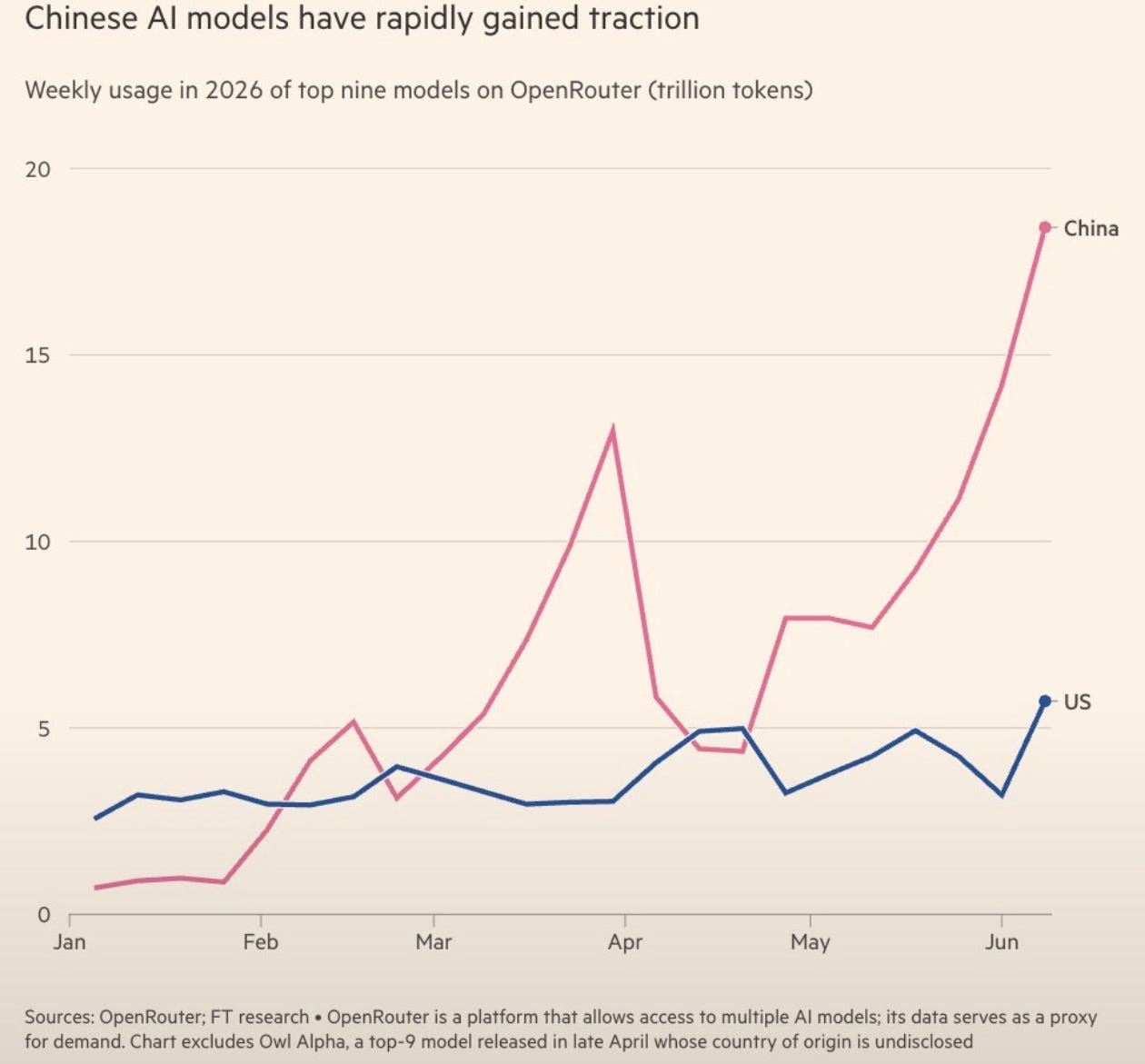
Fiber companies learned this in 2001. Overbuild created too much supply, consumers benefited, and investors discovered that technological efficiency can attack returns as effectively as a competitor. AI can work, adoption can surge, and data-center owners can still discover that the economic surplus flowed to customers, chip designers, device makers, or lower-cost rivals.
The Answers We Are Searching for in Q2
The AI investing thesis usually begins with a clean equation: more users create→ more queries; more queries require→ more compute; more compute requires →more data centers; more data centers →should create more profits. But there are missing variables determine whether shareholders get paid.
- Where will the query run?
- If processing shifts to the local device, a query Wall Street expected to monetize through a data center may never reach it.
- Who wins the model layer?
- If AI becomes competitive rather than winner-take-all, pricing may fall faster than the infrastructure bill.
- Who captures the profit pool?
- The data-center owner, device maker, application company, and customer-distribution platform cannot all earn monopoly-like returns from the same query.
Investors must also ask what produced reported EPS. Was it organic AI revenue and expanding margins, or was it an equity gain, private-company mark, tax benefit, foreign exchange, regulatory credit, asset sale, acquisition, depreciation change, or shrinking share count? Those items may be legal and economically relevant. None automatically proves AI monetization.
The Coastal Journal Q2 2026 Technology Risk Matrix
We assign each company a 🟢, 🟡, 🟠, or 🔴 rating based on current valuation, Buy/Hold/Wait-for-Lower-Prices judgment, CapEx-payback risk, earnings quality, and innovation leadership.
- 🟢 means margin of safety minimal to no downside risk
- 🟡 means quality worth holding but small downside likely
- 🟠 means elevated risk, downside more probable, patience required
- 🔴 means the valuation or capital-allocation risk is too dangerous and big declines ahead
A great company can receive an amber or red rating when its stock price assumes perfection. A controversial company can become green if the price falls far enough. The business does not change every second. The price investors are being asked to pay for it does.
Join the Full Access Team
Get The complete Q2 Technology Earnings Preview:
- Who has the best chance of making billions in the future?
- What happens to trillion-dollar infrastructure plans if more AI queries move from centralized data centers onto phones, computers, vehicles, and local devices?
- What is the risk at today’s valuations for Alphabet, Amazon, Microsoft, Apple, Meta, and Tesla?
- Do you own companies with real AI earnings power, or stocks that require near-perfect execution simply to justify today’s valuation?
- How can investors identify the accounting red flags, model-price compression, and excess-capacity signals that could turn an AI boom into a data-center glut?
- Where may Wall Street be looking in the wrong direction: another low-cost software subscription, or the physical AI product that becomes the next mass-market platform?
来源:Followin(查看原文)。本文用于加密行业资讯聚合,版权归原作者所有,如有侵权请联系删除。